Scholars, alumni, faculty, and students gathered at Beijing Foreign Studies University on April 16 to mark the 110th anniversary of the birth of Wang Zuoliang—a foundational figure in the modern Chinese study of English literature and one of BFSU’s defining intellectual figures—and the tenth anniversary of the Wang Zuoliang Institute for Advanced Studies in Foreign Literatures, founded at the university in his memory.
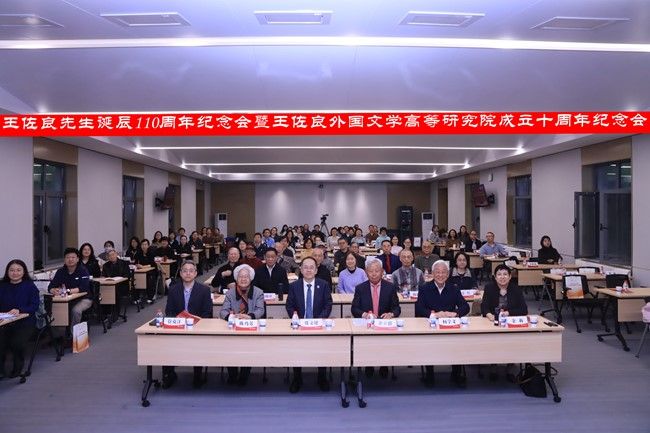
Among those attending were BFSU President Jia Wenjian; Jin Liqun, founding president of the Asian Infrastructure Investment Bank and a BFSU alumnus; Chen Naifang, a former BFSU president; Yang Xueyi, chair of the BFSU Alumni Association; and Guan Kejiang, editor-in-chief of the Global Times.
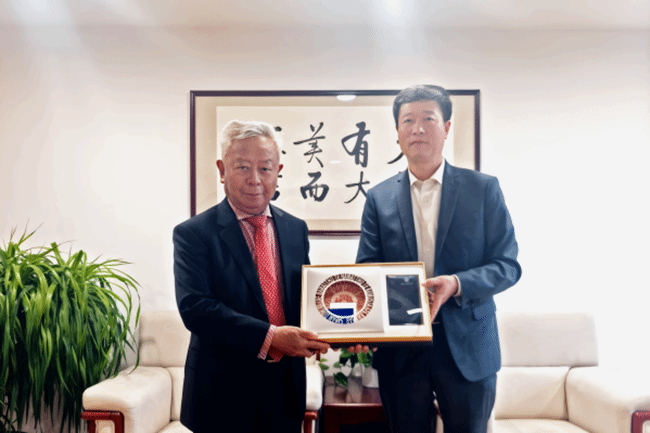
Earlier in the day, BFSU Party Secretary Li Hai met with Jin and outlined recent developments at the university. Jin, recalling his student years, argued that the rise of artificial intelligence has, if anything, raised the stakes for high-level foreign-language expertise: foreign-language universities, he said, have a substantial role to play in the years ahead.
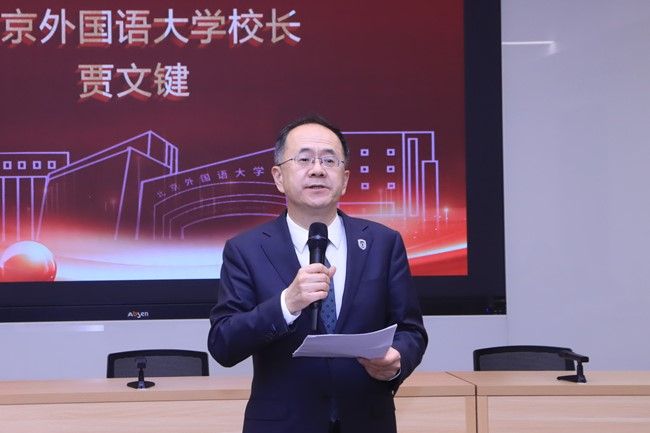
In his keynote, President Jia framed the commemoration as both a tribute and a charge—a moment to honor Wang’s scholarship and to recommit the university to advancing the study of foreign literatures in his spirit. He pledged that BFSU would continue to build an independent body of knowledge in foreign-language and literary studies and to deepen its contribution to cross-cultural understanding.
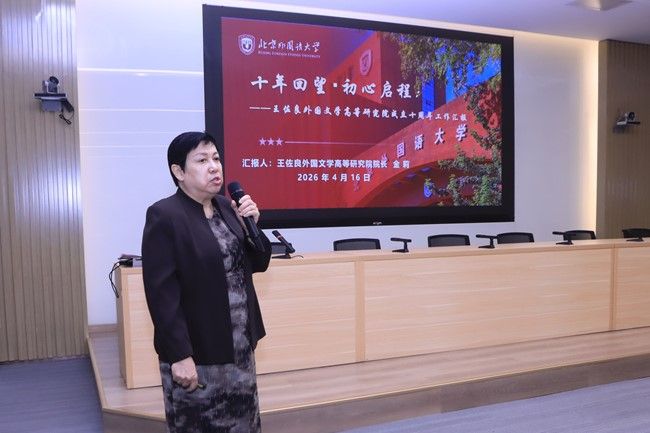
Jin Li, director of the Wang Zuoliang Institute, reported on the Institute’s first decade: a regular Wang Zuoliang Lecture Series and program of academic conferences, the Survey of Foreign Literatures book series, and the Wang Zuoliang Award for Studies in Foreign Literatures, now one of the field’s most prominent honors in China. Its current flagship project, funded by the National Social Science Fund of China, is a study of twenty-first-century literatures in English.
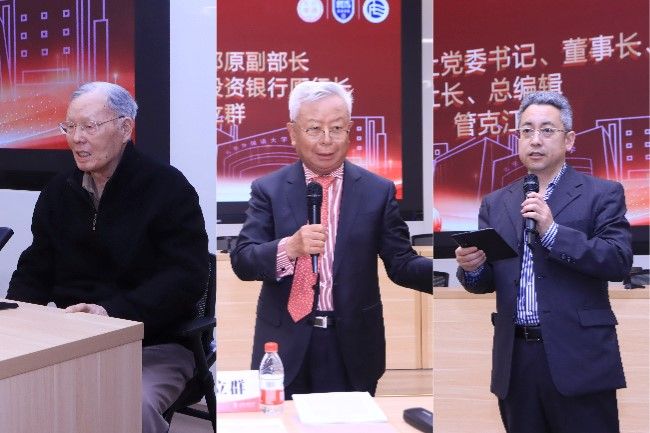
Personal reflections animated the rest of the program. Zhang Zhongzai, a senior professor at the School of English and International Studies (SEIS), remembered Wang as a scholar of immense learning who treated younger researchers as equals and insisted that “only innovation produces progress.” Jin Liqun offered a vivid image: Wang, he said, was equally at home in Chinese and Western traditions, indifferent to recognition, and a scholar who “climbed Everest without an oxygen mask.” He credited Wang’s instruction—read with a critical eye—as a discipline he still practices daily. Guan Kejiang argued that Wang’s union of broad reading, rigorous practice, deep linguistic command, and clear-eyed Chinese perspective remains directly relevant to international communication today.
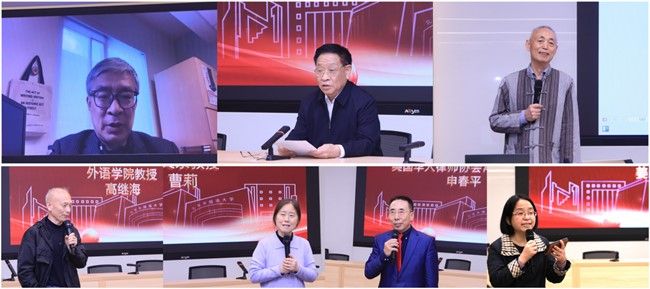
Further tributes came from Yang Guobin of the University of Pennsylvania’s Annenberg School for Communication; Guo Qiqing, professor at SEIS; Chen Guohua of BFSU’s National Research Center for Foreign Language Education; Gao Jihai of Henan University; Cao Li of Tsinghua University; Shen Chunping of the Chinese American Lawyers Association; and Jiang Hong of BFSU’s Institute of Foreign Literature Studies.
Closing the program, SEIS Dean Yang Luxin said the best tribute to Wang is continued work. She called on faculty and students to inherit the rigor of earlier generations while embracing the AI era—integrating language proficiency, humanistic depth, and digital fluency in the training of a new generation of scholars.
The event was hosted by the Wang Zuoliang Institute, the School of English and International Studies, and BFSU’s Institute of Foreign Literature Studies, with support from the Alumni Office and Foreign Language Teaching and Research Press.